
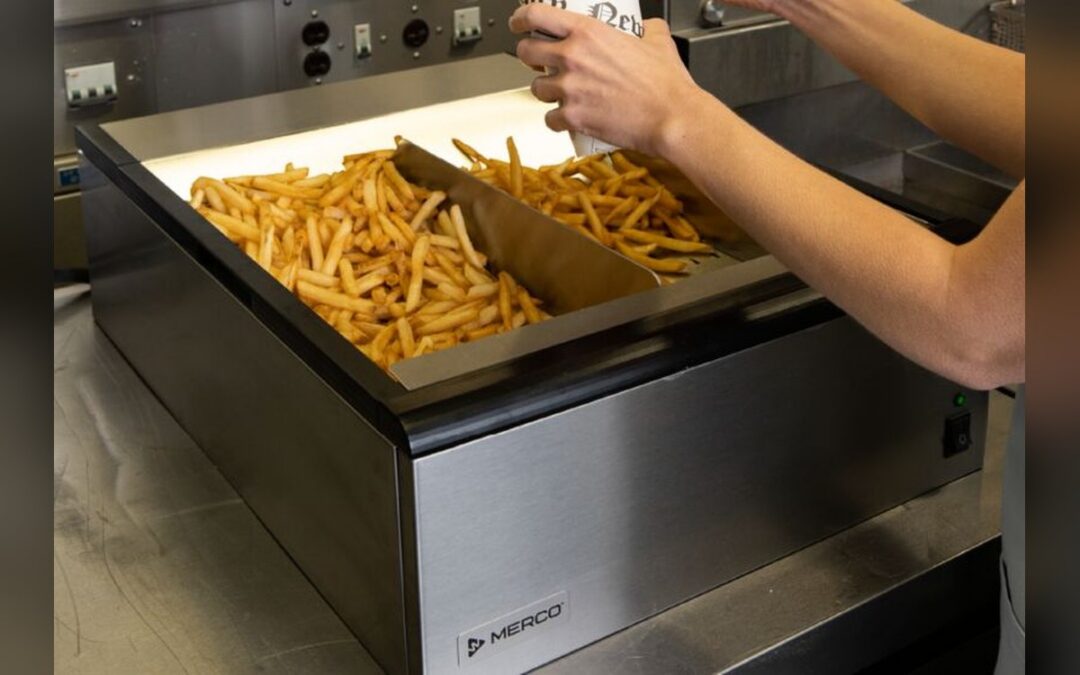

Fries, tenders, egg rolls, chips: guests judge them in the first bite, and the first bite usually tells them how long the food sat before it reached them. For a lot of operations, fried-food quality isn’t lost in the fryer. It’s lost in the minutes between the fryer and the guest.
The problem: great out of the fryer, soggy at the window
Most kitchens cook fried foods in batches ahead of demand, especially at peak. That means holding. The common holding options weren’t designed with crispy food in mind. Heat from above can dry product out on top while the bottom goes soft, and moist heat can turn crunch into mush. Different items also want different conditions, but many holding setups treat everything the same.
Why it matters: waste, remakes and a slower line
When holding doesn’t work, crews either throw product away and fry more, or they serve food that disappoints. Both cost you. Waste and remakes drive up food cost and oil use. Cooking smaller, more frequent batches to compensate puts more pressure on the fry station and slows the line right when speed matters most. And an inconsistent product is hard to fix with training alone.
How Merco’s CrispyMax helps
Holding is where a lot of fried-food quality gets lost, and that makes it one of the easiest places to win it back. It’s worth looking at how product is held, not just how it’s cooked. Merco’s CrispyMax® is built specifically for this job:
- Therma-Lock™ convected air. A powerful airflow system circulates hot air evenly over and around the food, with no overhead heat. Merco says that, unlike traditional heat-lamp setups, it delivers consistent top-to-bottom heat.
- Lane-by-lane control. Single-, double-, triple- or quad-lane models are available, and each lane has its own fan and temperature setting. Fries can sit in one lane while egg rolls or chicken tenders hold in another, each at its own temperature.
- Low profile. CrispyMax stands less than 8 inches tall and comes in countertop or drop-in versions, so it fits tight spaces and keeps line of sight clear.
- Tested hold performance. In Merco’s internal testing, CrispyMax held chicken tenders 50% hotter than a hot food well over a 30-minute total hold. Merco adds that, depending on the product, customers have doubled their hold times without seeing a drop in food quality.
- Easy cleanup. Crumb trays, dividers and food trays lift out and are dishwasher-safe. An integrated Quick Cool feature keeps the fans running after shutdown, so cleaning can start sooner.
- Accessories to fit the station, including racks, a side caddy, fry paper, tong and fry box holders, and CrispyMax carts.
Explore models and specs on Merco’s CrispyMax page.
Tips for better fried-food holding
Whatever equipment you use, these habits make a difference:
- Hold by item, not by station. Give each product its own lane and setting instead of one temperature for everything.
- Set hold times and stick to them. Decide how long each item can hold at quality, then label lanes or use timers.
- Keep moisture away from crispy items. Don’t hold fried foods in the same environment as steamed or sauced items.
- Put holding where the hand-off happens. A low-profile unit near the fryer or the pass cuts steps.
- Taste-test across the hold. Check product at the start, middle and end of its hold window during your trial.
- Make cleanup part of close. Removable, dishwasher-safe parts only help if the closing checklist uses them.
Segment notes
- Restaurants and QSR: Peak-period batching is where CrispyMax fits. Hold ahead without punishing the guest who orders at the end of the rush.
- C-stores: Fried items in grab-and-go and made-to-order programs live or die on texture. Lane control helps a small menu of fried foods share one unit.
- K-12: Serving lines often hold fries and tenders through multiple lunch periods, so longer quality holds help the last period’s students get the same food as the first.
- Bars: Bar food such as fries, wings and appetizers often waits on a busy pass, and a low-profile unit can keep it ready.
E-Source Miller’s take
We spend a lot of time with operators on fryers, oil life and cook times, and those matter. But in many kitchens, the biggest quality gain is downstream, at the holding step. A unit that keeps fried food crispy, lets each item hold at its own temperature and stays easy to clean can protect food quality and speed of service at the same time.
See the difference for yourself
Curious how your menu items would hold? Talk to your E-Source Miller rep about how CrispyMax would fit your menu, or visit our Culinary Center, 3680 W. Royal Lane, Suite 155, Irving, TX 75063, to talk through your fried-food program with our team. Start at esourcemiller.com.
Recent Comments